Dialling Up and Dialling Down
How Drawmetrics is Changing the Game for Leadership, Burnout, and Neurodivergence
We tend to view psychometric profiles as static labels - a permanent badge that dictates who we are and how we operate. But human beings are dynamic, and the tools we use to understand ourselves should reflect that reality.
A psychometric profile is best understood as a snapshot in time. It captures the specific traits, energies, and adaptations we draw upon in a given season. Over the past year, one specific tool has radically transformed how I support my coaching clients, executive teams, and even myself: Drawmetrics.
What is Drawmetrics
Drawmetrics is a psychometric tool backed by 20 years of research and validated by Larry Price, a leading global expert in psychometrics. It is a highly respected corporate tool - so much so that Emirates contracts the developer to use it for all their employee hiring and leadership guidance.
Globally, the tool boasts an 85% accuracy agreement rate.
However, in my own work using it with neurodivergent (ND) adults - including my own personal reports - we have seen a 100% agreement rate between the results and individuals lived experiences. That level of resonance makes it an extraordinarily grounding anchor for practical self-discovery.
How it Works
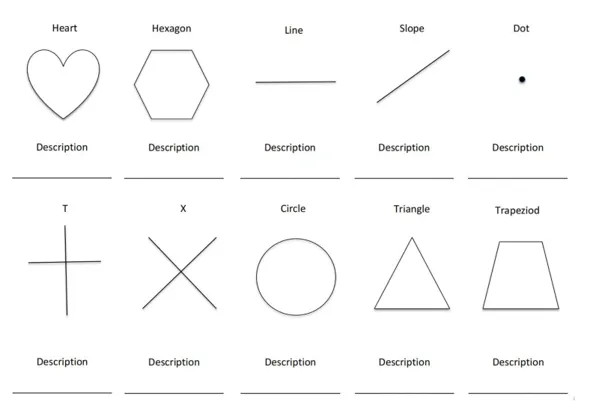
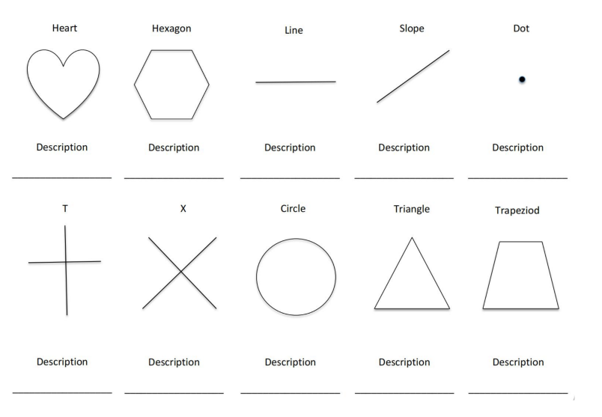
So, how does it actually work? Instead of spending hours on a test, the whole task takes just 3 to 4 minutes. You are presented with ten basic starting shapes. Your task is simply to turn these shapes into something else by drawing and then write a brief word association description underneath each one.
Why It’s a Gamechanger for Neurodivergent Individuals
When we look at standard psychometrics, traditional reports have a heavy reliance on dense questionnaire wording, which forces high executive processing and reading comprehension overhead. Furthermore, forced-choice Likert scales trigger social desirability bias, pressuring neurodivergent test-takers to ‘mask’ their natural style.
Drawmetrics takes a completely different approach. Non-verbal doodling and word association drastically reduce cognitive fatigue and verbal processing barriers. Spontaneous expressive production accesses authentic present states before conscious self-censoring mechanisms occur.
This method is built on core neuro-affirming pillars:
Drastically Reduced Cognitive Load: It replaces 100+ dense multiple-choice questions with brief, enjoyable mark-making that prevents burnout.
High Psychological Safety: It transforms an intimidating ‘exam’ environment into a creative, reflective self-awareness experience.
Language & Cultural Inclusivity: Expressive production operates independently of native language fluency, reading level, or dyslexia. It also eliminates alexithymia and language barriers through mark-making and intuitive association.
Present-Moment Focus: It evaluates the current state ‘NOW,’ accommodating fluid, context-dependent processing.
Individualised Precision: With over 1.5 trillion report variations, the tool treats each participant as a unique individual, never just a ‘type.’
Collaborative Human Debrief: AI-driven insights are validated through guided, supportive human conversations rather than automated scoring.
These elements provide profound benefits for ND individuals over standard psychometrics:
Replaces deficit-focused metrics with strength-based behavioural clarity.
Enables managers to understand communication and environment preferences without diagnostic disclosure.
Builds trust during onboarding by honouring authentic decision-making styles.
Supports sustainable workplace accommodations rooted in real-time self-awareness.
How I Am Using It
Here is a snapshot of how versatile and game-changing Drawmetrics has been across my work in Singapore, New Zealand, and Australia recently:
Senior Leadership Coaching: I'm using Drawmetrics with Senior Leadership Teams (SLTs) to map out leadership goals for 2027 across teams. It has been powerful for identifying key strengths within executive teams and establishing exactly how leaders can work together more effectively.
High-Stakes Hiring: An organisation I work with has been using Drawmetrics reports to structure interview prompts for a key position. The deep insights from the candidate’s responses revealed they weren't the right fit, saving the business from a mismatched hire while they hold out for the right candidate.
Support for ND Kids & ‘School Can't’: We use these reports with ND kids to design custom classroom and home support so they can activate their true potential. We are now using Drawmetrics to systematically lower students’ anxiety and map a safe way back to the classroom.
Burnout Recovery: For coaching clients in the thick of burnout, their reports clearly highlight their specific ‘dial ups’ and ‘dial downs,’ giving us a clear, practical roadmap to guide their recoveries.
Personal Reset & Grounding: I even used it for myself after going through an ND nervous system shutdown. Getting my own report gave me the clarity I needed to figure out where to go next, and working through it with my coach has brought me right back to solid ground.
To understand why this tool is so dynamic, you only have to look at my own two reports from August 2025 and August 2026.
In August 2025, during a relatively stable season, my professional traits leaned heavily towards being Collaborative, Optimistic, Structured, Task Oriented, Fun Loving, and Conflict Averse. Note that I did initially disagree with the term ‘Conflict Adverse’ - I am an accredited mediator and spend most days negotiating conflict in schools and workplaces. And this is why I needed to dial this down in 2025 - every single conversation I was having was treated as having lasting ramifications. It was a little bit exhausting. So, after receiving this report, I deliberately dialled down the over thinking of every sentence I spoke or wrote.
My personal traits in 2025 reflected being Passionate, Driven, Attentive, Focused, and Ambitious. I was naturally seeking harmony, relying on logical systems, and actively avoiding friction.
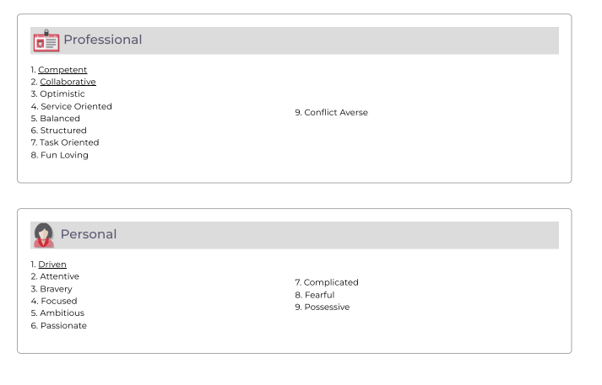
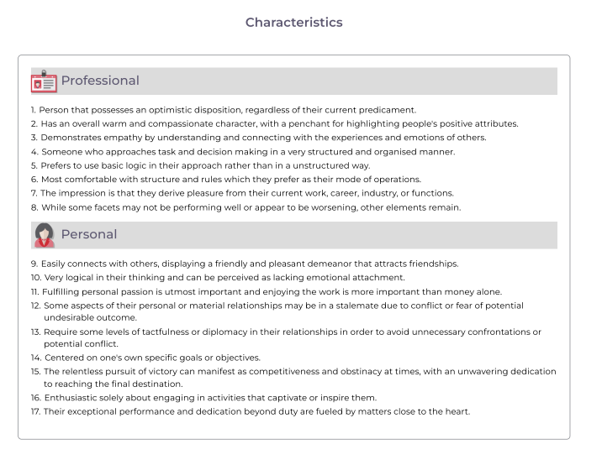
Fast forward to August 2026. Following an intense season between July and September, my report captured a starkly different survival state.
While core personal traits like Driven, Attentive, and Focused remained as baseline anchors, a suite of heavy protective traits emerged:
Stress & Exhaustion Signals: Professional markers shifted to include Exhausted and Stress Tolerant, directly capturing the physical and mental toll of high workplace demands.
Solitary Focus: Professionally, I shifted from Collaborative to Independent, Unilateral, and preferring solitary specialisation to protect my energy.
Defensive Guardrails: Traits like Stubborn, Opinionated, Prideful, Emotional, and Sentimental surged to the surface.
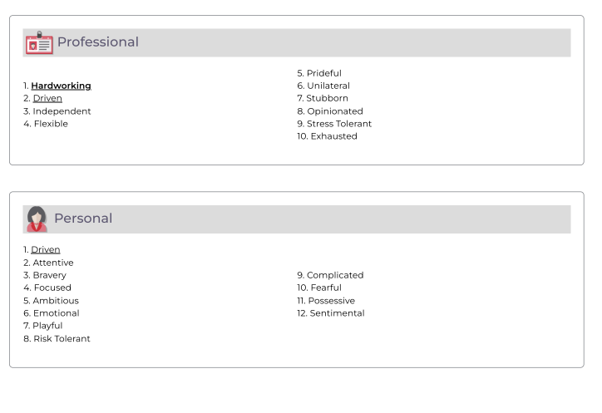
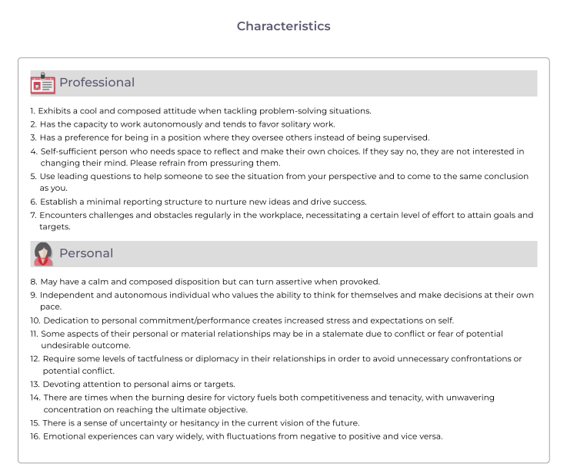
In traditional psychometrics, emerging traits like being ‘stubborn,’ ‘unilateral,’ or ‘emotional’ are often mislabelled as negative flaws. But Drawmetrics frames them as situational traits - behavioural attributes that provide vital strength in specific contexts, but risk becoming counterproductive if overextended.
Practical Application: Dialling Up and Dialling Down
Identifying situational traits gives us an actionable operational map rather than a rigid box. It allows us to intentionally choose when to dial up a trait for protection or progress, and when to dial down to prevent friction or burnout:
Emotional & Sensitive
Dial Up: Use deep empathy and attunement to team dynamics to foster authentic, caring connections and protect psychological safety when supporting traumatised ND kids or coaching clients.
Dial Down: When high emotional upheaval clouds objective judgement, delays difficult decisions, or causes me to take professional feedback personally.
Stubborn & Opinionated
Dial Up: Hold the line on core values and ethics, maintain unwavering dedication to key promises, and enforce strict personal boundaries during burnout recovery.
Dial Down: When it creates unnecessary team friction, prevents me from considering valid opposing viewpoints, or leaves me entrenched in outdated operational methods.
Inflexible & Fixed Mindset
Dial Up: Ensure strict process compliance, maintain operational focus, and uphold absolute fidelity to quality-tested standards when surrounding systems feel chaotic.
Dial Down: When it slows organisational agility, blocks continuous learning, or resists essential innovation during structural transitions.
Unilateral & Independent
Dial Up: Take self-sufficient space for reflection and autonomous decision-making when processing deep strategic choices or recovering from sensory overload.
Dial Down: When isolating prevents team collaboration on shared goals or stops me from asking for help to relieve exhaustion.
Understanding our behavioural snapshot isn't about putting ourselves in a box. It’s about gaining the clarity needed to navigate tough seasons, protect our nervous systems, and leverage our authentic strengths effectively.
To actively dial down these protective traits, I have put deliberate operational supports in place: debriefing with my coach to process high emotions safely, re-opening collaborative loops before making unilateral decisions, and scheduling dedicated nervous system resets to ease physical exhaustion.
The impact on my work performance has been immediate, as stepping back from defensive stubbornness has eliminated unnecessary frictional drag and restored dynamic, trusted collaboration across the teams I work with. On a personal level, loosening those survival guardrails has allowed my nervous system to shift out of high-alert survival state, drastically reducing baseline anxiety, restoring my energy reserves, and bringing authentic balance back into my daily life.
In the workplace, Drawmetrics serves as a powerful bridge between executive strategy and individual employee wellbeing. Senior leadership teams can use its high-accuracy snapshots to map long-term strategic goals, optimise executive team dynamics, and structure targeted hiring prompts that ensure true candidate fit.
For managers, the tool provides clear insight into team members' communication and environmental preferences without requiring invasive diagnostic disclosures. On an individual level, employees gain a neuro-affirming framework that builds trust during onboarding, informs sustainable workplace accommodations, and offers a concrete operational roadmap to navigate high-stress seasons and prevent burnout.
It is an incredible new development in the world of psychometrics!
For more insights on psychometrics, neurodivergence or implementing trauma-informed strategies in your organisation, contact me at [email protected].
