Slowing Down Your Drive
Over October and early November, I shared the raw reality of having to dial down my work ethic after an intense surgical complication forced me to physically stop.
While recognising when to hit the brakes is crucial, waiting for your body to stage a full revolt isn't a sustainable wellbeing strategy.
For this month’s blog, I want to look directly at the engine driving that chronic momentum: slowing down your drive.
Specifically, I want to unpack overdelivering - and the uncomfortable truth of what actually sits beneath it.
The Root Cause: Overgiving as Armour
For years, I told myself that overdelivering was simply having high standards, being generous, and striving for excellence. But through deep conversations with my coach, I had to confront what was really powering that habit: a fear of not being enough.
In the neurodivergent community, many of us live with Rejection Sensitive Dysphoria (RSD). For an ND brain wired this way, overdelivering is rarely about exceeding someone else's expectations; it is a defensive shield.
We overgive, overproduce, and overwork as a form of self-protection—believing that if we do more than anyone could possibly ask for, we might finally insulate ourselves from criticism, rejection, or the persistent internal whisper that we are falling short.
This was not a sudden revelation. I first saw it staring back at me in black, white, and green in 2024 when I received my Leadership Circle Profile.
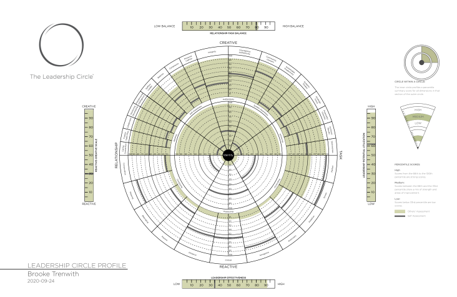
This profile is norm-referenced against 100,000 leaders worldwide. Across multiple creative competencies, you can see that my evaluators scored me in the top 5% (the outer green shading). But look at the heavy grey line in the middle: that is where I scored myself.
The disconnect is stark.
Even if I intentionally dialled back my delivery by 20%, my performance would still comfortably sit in the top quartile of leaders globally. Yet my internal operating system cannot compute that.
It continually screams that I haven't done enough and must produce more.
When the Universe Sends a Sledgehammer (via the Waikato Police)
About a week after that 2024 Leadership Circle debrief, the universe decided subtlety wasn't working.
I was driving home from running a professional learning and development session in Cambridge, mulling over my debrief coach’s parting advice to ‘slow down your drive.’
Lost in thought, I cruised along at 65 km/h, assuming I was in a 70 km/h zone. What I had failed to notice was that the speed limit had recently been lowered to 50 km/h. Next thing I knew, red and blue flashing lights lit up my rearview mirror.
I pulled over. The police officer who walked up to my window was exceptionally polite and professional - even as he handed me a $250 fine and 20 demerit points. As he handed back my license, he looked at me and delivered his parting words:
"Brooke – you need to slow down your drive."
Sometimes the universe doesn’t whisper; it hits you over the head with a sledgehammer - and even then I didn’t listen.
The Slippery Slope of the Extra Mile
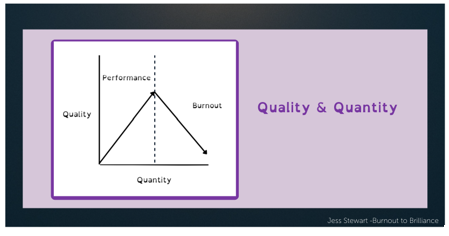
The hard reality is that pushing past our threshold doesn’t just drain our tanks; it actively degrades our impact. I have been working closely on this with my coach, Jess Stuart (author of Burnout to Brilliance).
Burnout is never sudden. It creeps in incrementally, beginning at Stage 1 with a compulsive drive to prove yourself, quickly progressing into neglecting your own needs, denying mounting stress, and eventually leading to physical and mental collapse.
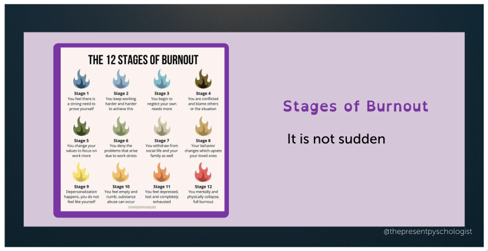
Overdelivering out of fear is the express lane through those early stages.
Bridging the Knowing-Doing Gap
Intellectually understanding this dynamic does not automatically cure it. In fact, self-awareness without structural support often looks like this:
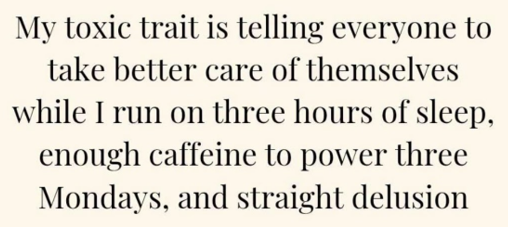
(Yes, I felt personally attacked by this meme too.)
Logic alone will not rewire an RSD-driven nervous system. Knowing what to do is not the same as doing it.
To ensure I don't spend the next four years stuck in the same cycle, I am continuing to work with Jess on a monthly basis to target the underlying fear directly.

Lessons from Buttercream: Joy vs. Fear
To change this pattern, I’ve had to ask myself: What else do I get from overdelivering?
Years ago, when I ran a cake decorating business, my mentor in the United States gave me a piece of advice that stuck with me:
"Get the client’s budget, and then make the cake you actually want to make - ignoring the hourly rate. You’ll have far more fun. And if you don’t like the client? Triple the price to make the experience worth your while."

I loved making those sugar orchids by hand. When I spent hours meticulously crafting each petal, I was technically ‘overdelivering’ beyond what the client paid for. But I wasn't doing it out of panic or a need to appease them; I was doing it out of genuine joy and artistic expression.
That distinction is everything.
In my work today, what I love most is making a tangible, positive difference in people's lives - not logging an hourly rate.
Overdelivering in enjoyment is creative, energising, and generative.
Overdelivering through fear of inadequacy is exhausting, draining, and unsustainable.
Slowing down my drive doesn't mean caring less or doing mediocre work.
It means auditing the fuel in my tank.
If the extra effort is powered by love of the craft, connection, and joy, it breathes life into my work.
But if it is powered by fear, self-doubt, and the urge to prove my worth, it is time to hit the brakes.
Three Check-Ins for Your Drive
Audit the Fuel Source: Before you add an extra deliverable, ask yourself: Am I offering this out of genuine excitement and service, or out of anxiety that what I’ve already done isn't enough?
Take the 20% Haircut: If you have high-achieving tendencies, pulling back your output by 20% will still deliver exceptional work without pushing you past your peak performance curve.
Set External Speed Bumps: When internal brakes fail, use external guardrails—trusted colleagues, calendar boundaries, or monthly coaching sessions to hold you accountable to your limits.
As November rolls on, I invite you to take your foot off the accelerator and check your dashboard.
What is powering your drive this week?
For more insights, contact me at [email protected].
